If your child has been recommended for orthodontic treatment, one of the first questions you may face is whether any teeth need to come out first.
For many parents, this is an unexpected and sometimes worrying part of the conversation. Why would anyone want to remove healthy teeth?
The answer lies in space. Orthodontic treatment is fundamentally about creating the right conditions for teeth to align properly, function well, and remain stable for life.
Most of the time there simply is plenty of space in the jaw to achieve great results without removing adult teeth. But the decision is never taken lightly and sometimes, the crowding or bite correction is too severe and one or more teeth need to be extracted to create the right spacing to be able to get an excellent outcome. It is never guesswork!
Here is how registered specialist orthodontists in New Zealand approach it.
Why Space Matters in Orthodontics
The human jaw and the number of teeth we grow do not always match up perfectly.
Genetics play a significant role. A child may inherit a smaller jaw from one parent and larger teeth from the other, leaving insufficient room for all the adult teeth to come through in good alignment. This is one of the most common reasons orthodontic treatment is needed at all.
When crowding is mild, a specialist orthodontist may be able to create space through other means, such as widening the arch with an expander appliance or gently reshaping the sides of teeth.
But when crowding is significant, the most reliable and stable long-term solution is often to remove teeth to create the room needed for everything else to align correctly.
The goal always has an emphasis on function, aesthetics and stability, with well-aligned teeth that are easy to clean and maintain. Extraction is one tool that helps achieve that, not a shortcut or a sign that something has gone wrong.
The Assessment Process
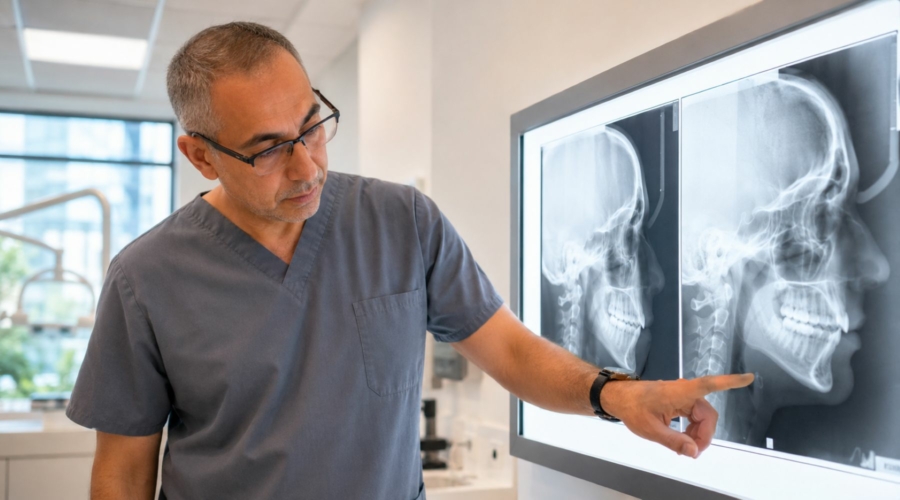
The decision to extract teeth is based on a thorough specialist assessment. A registered specialist orthodontist in New Zealand will typically gather the following before making any recommendation:
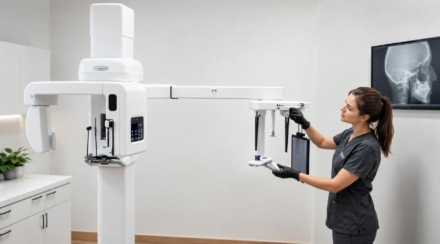
- Cephalometric X-rays: Side-on skull X-rays that allow the orthodontist to measure the relationship between the jaw bones, the angle of the teeth, and the overall facial profile.
- Panoramic X-rays: A full-mouth X-ray showing the position of all teeth, including those yet to emerge, the health of tooth roots, and any impacted teeth.
- Study models or scans: Digital or physical models of the teeth that allow precise measurement of available space and crowding.
- Facial photographs: Front and side-on photos of the face and teeth that help assess the profile and the likely impact of treatment on facial appearance.
- Clinical examination: A hands-on assessment of the bite, jaw movement, gum health, smile assessment and the position of individual teeth.
Together, this information gives the orthodontist a detailed picture of the current situation and what is likely to happen as your child continues to grow.
Treatment planning is carried out with growth in mind for child patients. This level of diagnostic rigour is the standard expected of every NZAO member.
Which Teeth Are Removed, and Why Those Ones?
When extractions are recommended, specialist orthodontists have several options depending on the crowding and bite patterns observed. Often, premolars which are the teeth just behind the canine (the pointy teeth) are considered as you have 4 of these in each arch and they do not affect smile aesthetics or arch dimensions.
Premolars sit in a position where their removal creates useful space both toward the front of the mouth and at the back. They are also teeth that, once removed and the gaps closed through treatment, leave very little visible trace.
In some cases, other teeth may be recommended for removal. If a tooth is already damaged, has a poor root structure, or is severely out of position with little prospect of being brought into line, extracting it may produce a better long-term outcome.
Wisdom teeth are a separate consideration and are often discussed later in a patient’s treatment journey.
The number of teeth removed follows a logic of balance. Removing one tooth on the upper left but not the upper right would leave the midline of the smile off-centre. For this reason, extractions are often carried out in symmetrical pairs, one on each side, unless there is an asymmetry in the bite. Often, both upper and lower premolars are considered in severe crowding cases requiring bite correction.
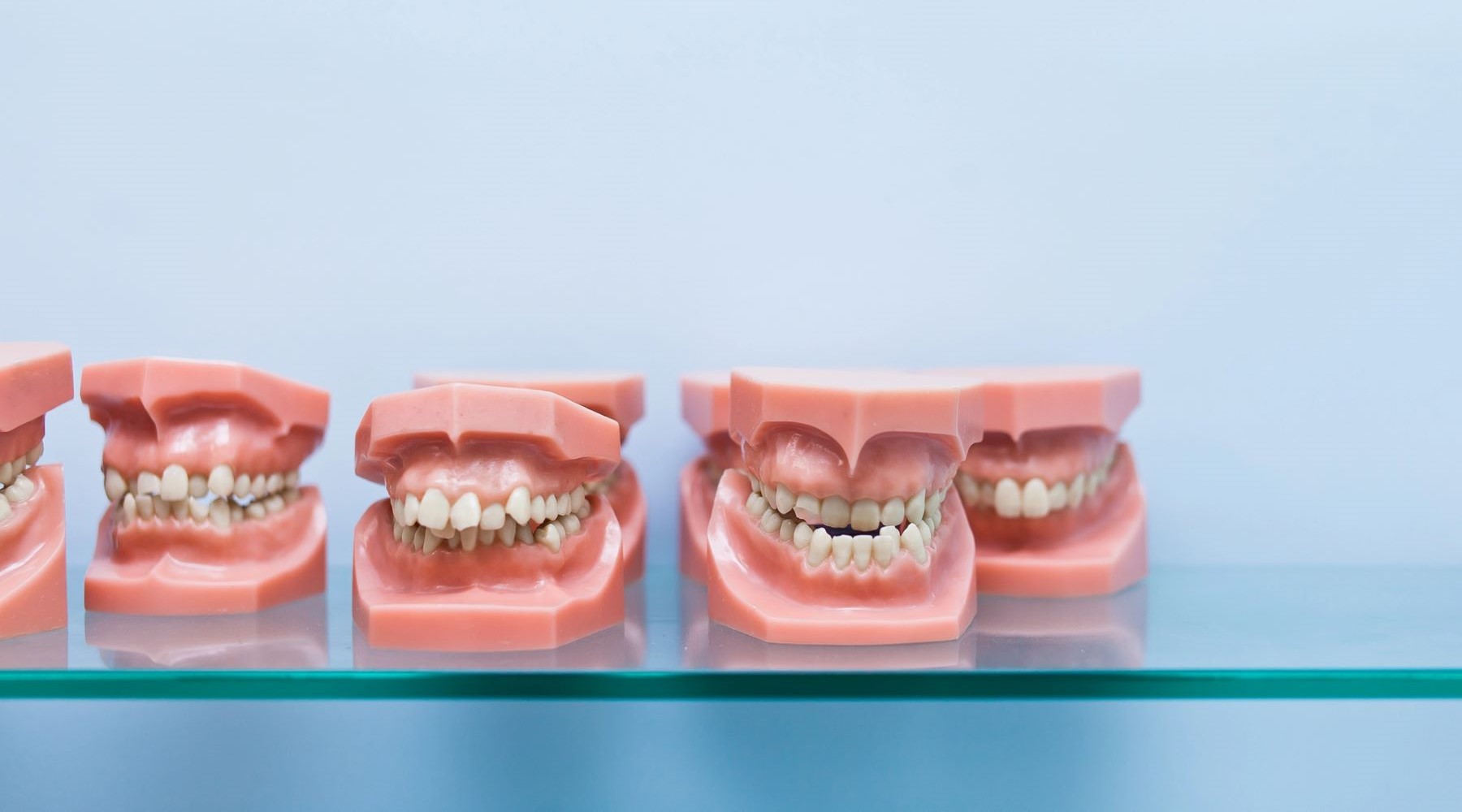
When Extractions Are Not The Answer
Extractions are not always necessary. A specialist orthodontist will only recommend them when the clinical evidence supports it.
In cases of mild to moderate crowding, or where the jaw is still growing and can be guided to create more space, non-extraction approaches are often preferable.
Arch expansion, where a palatal expander gradually widens the upper jaw, is one approach used particularly in younger children whose jaw sutures have not yet fused. This can create meaningful space without any extractions.
In cases where teeth are only mildly out of alignment, controlled movement with braces or aligners alone may be sufficient.
The age of the patient matters significantly. Younger children have more capacity for growth modification, meaning a specialist orthodontist may be able to influence jaw development in ways that would not be possible once growth has slowed.
This is one of the key reasons the New Zealand Association of Orthodontists recommends that children be assessed by a registered specialist no later than age eight, even if treatment is not expected to begin for several years.
What Happens If Crowding Is Left Untreated?
Parents sometimes wonder whether crowding will sort itself out as a child grows. In most cases, it will not.
Crowding tends to worsen over time as the growth of the jaws is not uniform in all dimensions to result in a larger diameter bone. It is standard for some areas in the jaws to “shrink” as the jaw reach their final size.
Leaving significant crowding untreated can make teeth harder to clean, increasing the risk of decay and gum disease. It can also affect the bite, placing uneven pressure on teeth and jaw joints over time.
Treating crowding at the right time, with or without extractions, is generally easier, less time-consuming, and less costly than addressing problems that have been allowed to worsen.
Only a registered specialist orthodontist has the training to assess the full picture and advise on the optimal timing for your child’s specific situation.
Find a Specialist Orthodontist Near You
Every child’s situation is different. Whether extractions are likely or not, the most important step is a proper assessment from a registered specialist orthodontist.
The New Zealand Association of Orthodontists represents registered specialist orthodontists throughout New Zealand. Every orthodontist listed in our Find a Specialist tool holds a recognised specialist qualification and is registered with the Dental Council of New Zealand.
They are the most qualified professionals in the country to assess, plan, and deliver orthodontic treatment for your child.
Use our Find a Specialist tool to locate a registered specialist orthodontist in your area and take the first step. The earlier your child is assessed, the more options are available.
Frequently Asked Questions
Yes, to a significant degree. The size and shape of the jaws, the size of the teeth, and the relationship between the upper and lower jaw are all strongly influenced by genetics. A child can inherit a narrow jaw from one parent and large teeth from the other, resulting in crowding that neither parent experienced individually. This is why orthodontic problems often run in families. Underlying skeletal issues can develop gradually and are best identified early by a registered specialist orthodontist, even if your child’s teeth appear reasonably straight in the early years.
This is one of the most common concerns parents raise, and it is entirely understandable. When extractions are planned carefully by a specialist orthodontist, the effect on facial appearance is considered as part of the treatment plan from the outset. In many cases, particularly where there is significant crowding or protrusion of the front teeth, treatment that includes extractions can actually improve the facial profile. A registered specialist orthodontist will assess your child’s facial profile as part of their full diagnostic assessment before making any recommendation.
The New Zealand Association of Orthodontists recommends that children be seen by a registered specialist orthodontist no later than age eight. At this stage, the first adult molars and incisors have usually come through, giving the specialist enough information to assess jaw development and identify any early signs of crowding or bite problems. An early assessment does not mean early treatment. In many cases the orthodontist will simply monitor your child over time and act when the timing is right.
Yes! In cases of mild to moderate crowding, particularly in younger children, a specialist orthodontist may be able to create space by expanding the arch, reshaping the edges of teeth slightly, or working with the natural growth of the jaw. Whether extraction can be avoided depends on the degree of crowding, the size of the teeth relative to the jaw, the age of the patient, and the bite issue that is being addressed. There is no single answer that applies to every child, which is why a full assessment by a registered specialist orthodontist is so important.
In most cases, orthodontic treatment begins within a few weeks of extractions, once the gum has healed sufficiently. The timing will depend on your child’s individual treatment plan and the type of appliance being used. The gaps left by extracted teeth are closed progressively as part of the orthodontic treatment itself, so by the time treatment is complete there will be no visible spaces.