If your dentist has offered to fit you with braces or aligners, you might be wondering whether that’s fine or if you should see a specialist orthodontist instead (read more on how to choose an orthodontist here). It’s a fair question, and one more New Zealanders are asking as orthodontic treatments like Invisalign clear aligners become more widely available through general dental practices.
The short answer is this: orthodontists and dentists are not the same thing, and for braces or any orthodontic treatment, a registered specialist orthodontist will almost always deliver a safer, more accurate, and longer-lasting result. Here’s why.
The Difference in Training Matters More Than You Might Think
All orthodontists begin their careers as dentists. After completing a general dental degree, they return to university for an additional three years of full-time specialist training, focused entirely on orthodontics, facial growth, bite mechanics, and the biology of tooth movement.
That extra training is substantial. It covers complex diagnosis, treatment planning across all ages, the management of jaw development in children, and the use of a wide range of fixed and removable appliances. It is tested through rigorous university examinations, and only those who pass are eligible for registration as a specialist orthodontist with the Dental Council of New Zealand. It works out to about 5,000 hours of training to be an orthodontist.
A general dentist, no matter how experienced or well-intentioned, does not have this specialist training. A dental degree covers orthodontics only at an introductory level – about 80 hours of orthodontic-related training. Offering braces or aligners does not require a dentist to have completed any formal postgraduate orthodontic qualification.
What a Proper Orthodontic Assessment Involves
A full orthodontic assessment is significantly more involved than a routine dental check-up. An orthodontist does not simply look at whether your teeth are straight. They assess the relationship between your upper and lower jaws, the way your teeth meet when you bite (your occlusion), the development of your facial structure, the position of teeth that may not yet have come through, and whether any underlying skeletal issues need to be addressed.
This requires specialist knowledge in facial growth and development, which forms a core part of orthodontic training. A general dentist performing a check-up is not trained to carry out this kind of comprehensive assessment and may not identify issues that, if caught early, could be treated more simply and effectively.
For children in particular, the timing of orthodontic treatment is critical. An orthodontist is trained to identify the right window for intervention. If that window is missed, treatment can become more complex or require more invasive approaches later on.
The Risks of Getting Braces from a Non-Specialist
Orthodontic treatment involves applying controlled forces to teeth and the underlying bone. When this is done without adequate specialist knowledge, a range of problems can arise:
- Root resorption: Incorrect force levels or poorly planned tooth movement can shorten tooth roots, weakening the long-term stability of teeth.
- Missed underlying issues: Problems with jaw alignment, skeletal development, or impacted teeth may be overlooked if the practitioner lacks specialist diagnostic training.
- Relapse: Teeth that have been moved without a full understanding of retention and long-term bite mechanics are more likely to drift back toward their original position after treatment ends.
- Gum and bone damage: Moving teeth into positions that are not sustainable within the bone structure can lead to gum recession or bone loss around affected teeth.
- Incomplete treatment: If complications arise that a general dentist is not equipped to manage, the patient may need to be referred mid-treatment to a specialist, often at greater cost and complexity than if they had seen a specialist from the outset.
These risks are not hypothetical. Specialist orthodontists across New Zealand regularly see patients who require corrective treatment following orthodontic work carried out by non-specialists.
The Case of Invisalign and Clear Aligners
Clear aligners like Invisalign are increasingly offered through general dental practices in New Zealand. While the technology is impressive, the aligner itself is simply a tool. The quality of the outcome depends almost entirely on the expertise of the person planning and managing the treatment.
Orthodontists use aligners as one option among many, selecting them where they are appropriate and combining them with other appliances when needed. They are also trained to identify cases where aligners are not the right choice, which requires exactly the kind of comprehensive assessment described above.
A general dentist offering Invisalign may be a well-intentioned practitioner, but they are doing so without specialist training in the full scope of orthodontic diagnosis and without the depth of knowledge needed to manage complex cases or unexpected complications.
When Should a Child See an Orthodontist?
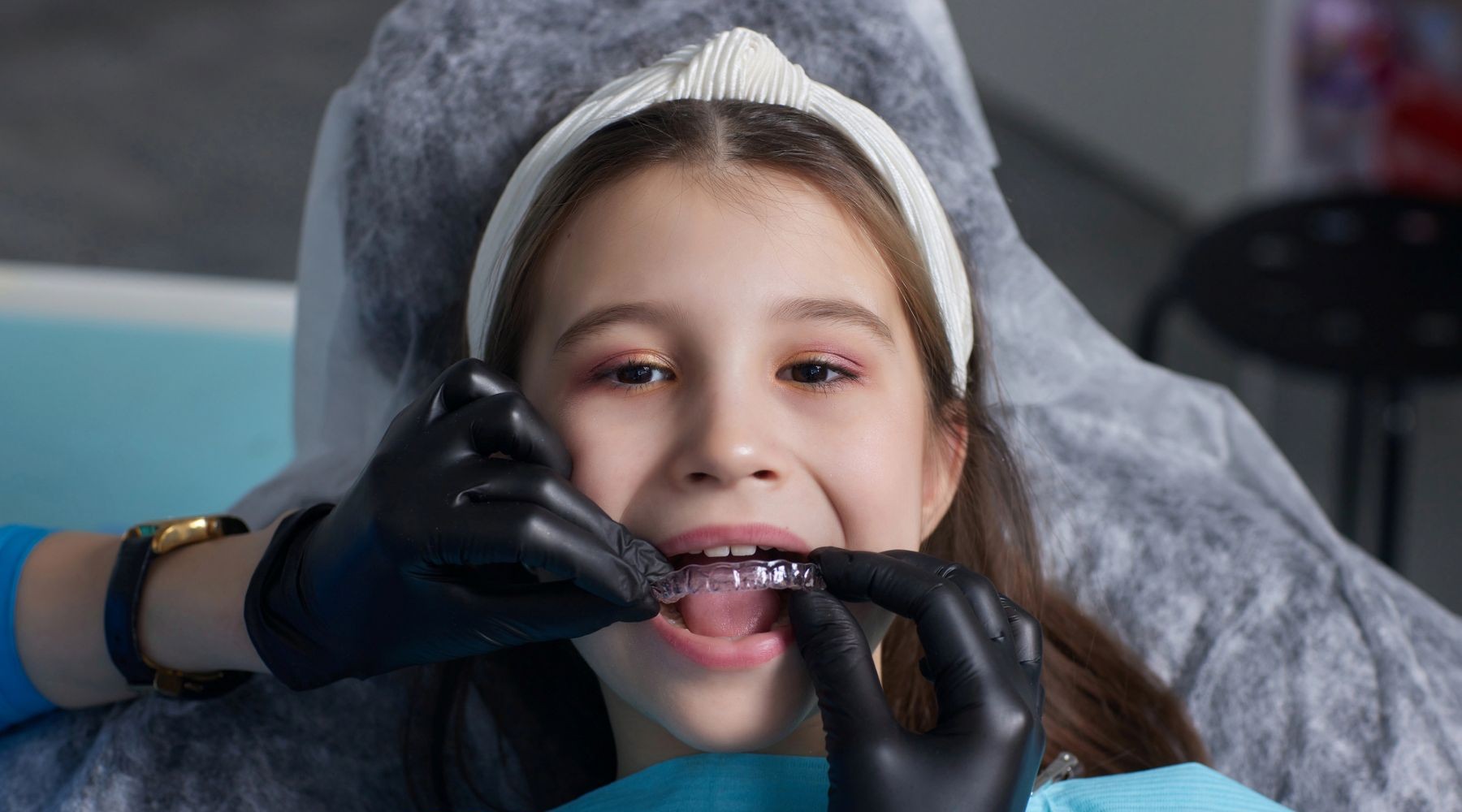
For children, early assessment by a specialist orthodontist can make a significant difference. The New Zealand Association of Orthodontists recommends that children be seen by a specialist orthodontist around age eight or as soon as you notice something wrong with your child’s bite or smile. This is not because treatment will necessarily start at that age, but because it allows a trained specialist to monitor jaw development and identify the optimal time to intervene.
Signs that a child should be assessed by an orthodontist include:
- Early or late loss of baby teeth
- Difficulty chewing or biting
- Mouth breathing or snoring
- Crowded, misplaced, or blocked teeth
- Jaws that shift, click, or appear disproportionate to the face
- Frequently biting the cheek or roof of the mouth
- A protruding upper or lower jaw
Your dentist may refer your child to an orthodontist if they notice any of these signs. However, you do not need a referral to book a consultation with a registered specialist orthodontist directly.
Choosing a Registered Specialist Orthodontist in New Zealand
In New Zealand, the title “Specialist Orthodontist” is legally protected. Only practitioners who hold a specialist orthodontic qualification and are registered with the Dental Council of New Zealand as a specialist may use this title. If you are unsure whether your practitioner is a registered specialist, you can check the Dental Council’s public register online.
Orthodontics New Zealand (the public face of the New Zealand Association of Orthodontists) provides a search tool to help you find a registered specialist orthodontist in your area. All orthodontists listed are fully qualified NZ-registered specialists committed to ongoing professional development and the highest standards of patient care.
Orthodontics is not a sideline for these practitioners. It is all they do, every day. That depth of focus is what makes the difference.
Frequently Asked Questions
The main risks include root resorption (shortening of tooth roots due to incorrect forces), missed diagnosis of underlying jaw or skeletal problems, relapse after treatment ends, gum recession, and bone loss around teeth. There is also a risk of needing to restart or correct treatment with a specialist, which can add significant cost and complexity. These risks arise because orthodontic treatment requires specialist knowledge that goes well beyond general dental training.
Not in the specialist sense. A dental check-up focuses on the health of your teeth and gums. A full orthodontic assessment goes much further, evaluating jaw relationships, bite mechanics, facial growth patterns, the position of unerupted teeth, and skeletal development. This level of assessment requires specialist training in orthodontics that general dentists do not receive as part of their dental degree.
Children should ideally be assessed by a specialist orthodontist around age eight or as soon as you notice something wrong with your child’s bite or smile. This does not mean treatment will start at that age. It simply allows a specialist to monitor development and identify the best time to act. Early assessment is particularly important if a child shows signs of crowding, bite problems, jaw asymmetry, mouth breathing, or early or delayed loss of baby teeth.
It carries greater risk than seeing a registered specialist. While some dentists in New Zealand offer orthodontic treatments, they do so without the three years of additional full-time university training that orthodontists complete. This means they may lack the depth of knowledge needed to plan treatment accurately, manage complications, or identify cases requiring specialist intervention. For straightforward cases outcomes may be fine, but there is no way for a patient to know how complex their case is without a proper specialist assessment.
Key signs include crowded or overlapping teeth, difficulty chewing or biting, a visibly protruding upper or lower jaw, early or late loss of baby teeth, mouth breathing, frequent cheek biting, a jaw that clicks or shifts when opening, and teeth that appear blocked or displaced. Your dentist may suggest a referral, but in New Zealand, you can also book directly with a registered specialist orthodontist without one.
A dental check-up focuses on the health of your teeth, gums, and mouth. An orthodontic assessment evaluates the alignment and relationship of your teeth and jaws, including how your upper and lower jaws relate to each other, how your teeth meet when you bite, the development of your facial skeleton, and the position of any teeth that have not yet emerged. It will typically involve specialist X-rays such as a cephalometric (side-on skull) X-ray, along with detailed study models or photographs. It is a fundamentally different type of examination.
Generally, no, not at the level required for orthodontic planning. Diagnosing jaw growth problems requires specialist knowledge of facial development, skeletal relationships, and growth prediction. This is a core component of orthodontic specialist training but is only covered briefly in a general dental degree. A dentist may notice obvious signs and refer a patient on, but the detailed assessment and treatment planning must be carried out by a registered specialist.
Yes, and it is more likely. Relapse, where teeth drift back toward their original positions after treatment, can occur even after specialist treatment if retention is not managed properly. The risk is higher when treatment has been carried out without full understanding of bite mechanics, tooth movement biology, and long-term retention planning. A registered specialist orthodontist is trained to create stable results and to provide appropriate retention strategies to maintain them. Poor treatment planning from the outset increases the chance that results will not hold.