The short answer is yes, to a meaningful degree. Registered specialist orthodontists are trained to assess jaw growth patterns, interpret diagnostic records, and make evidence-based predictions about how a child’s face and jaw will develop.
That predictive ability is one of the most important things that sets specialist orthodontic care apart.
Why Jaw Growth Prediction Matters
Orthodontic treatment is not simply about straightening teeth. In children and adolescents, the jaws are still developing, and the relationship between the upper and lower jaw has a profound effect on how the teeth will eventually sit, how the face will look, and how the bite will function over a lifetime.
Treating teeth in isolation, without accounting for the jaw growth still to come, can lead to an unstable result and outcomes that look acceptable initially but deteriorate as the child continues to develop.
A specialist orthodontist does not just treat what they can see today. They plan treatment around what the face and jaw are likely to do over the coming months and years.
In some cases, this means timing an intervention to work with a growth spurt. In others, it means holding off until growth has stabilised. And in cases where jaw development is likely to create problems, it means acting early to guide growth while the window to do so is still open.
How Specialist Orthodontists Assess Jaw Growth
Predicting jaw growth is based on a structured analysis of diagnostic records, combined with deep specialist knowledge of how the face develops across childhood and adolescence.
The key tools used by NZAO members include:
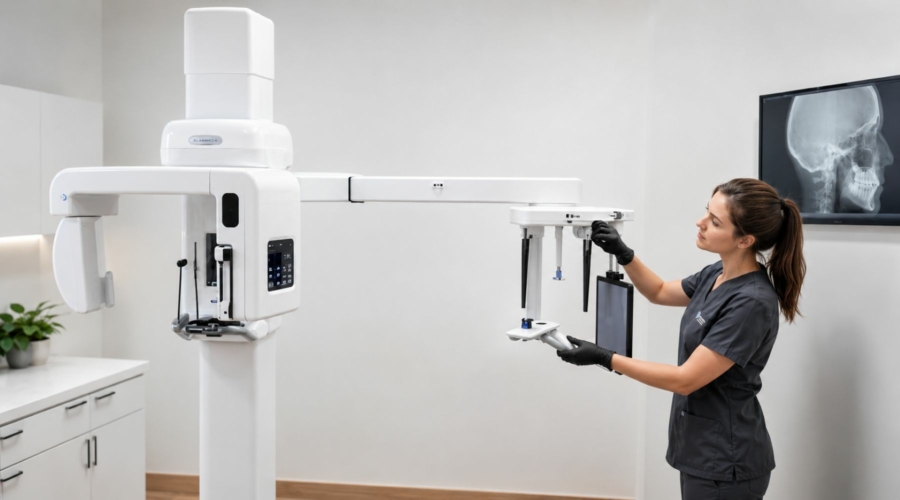
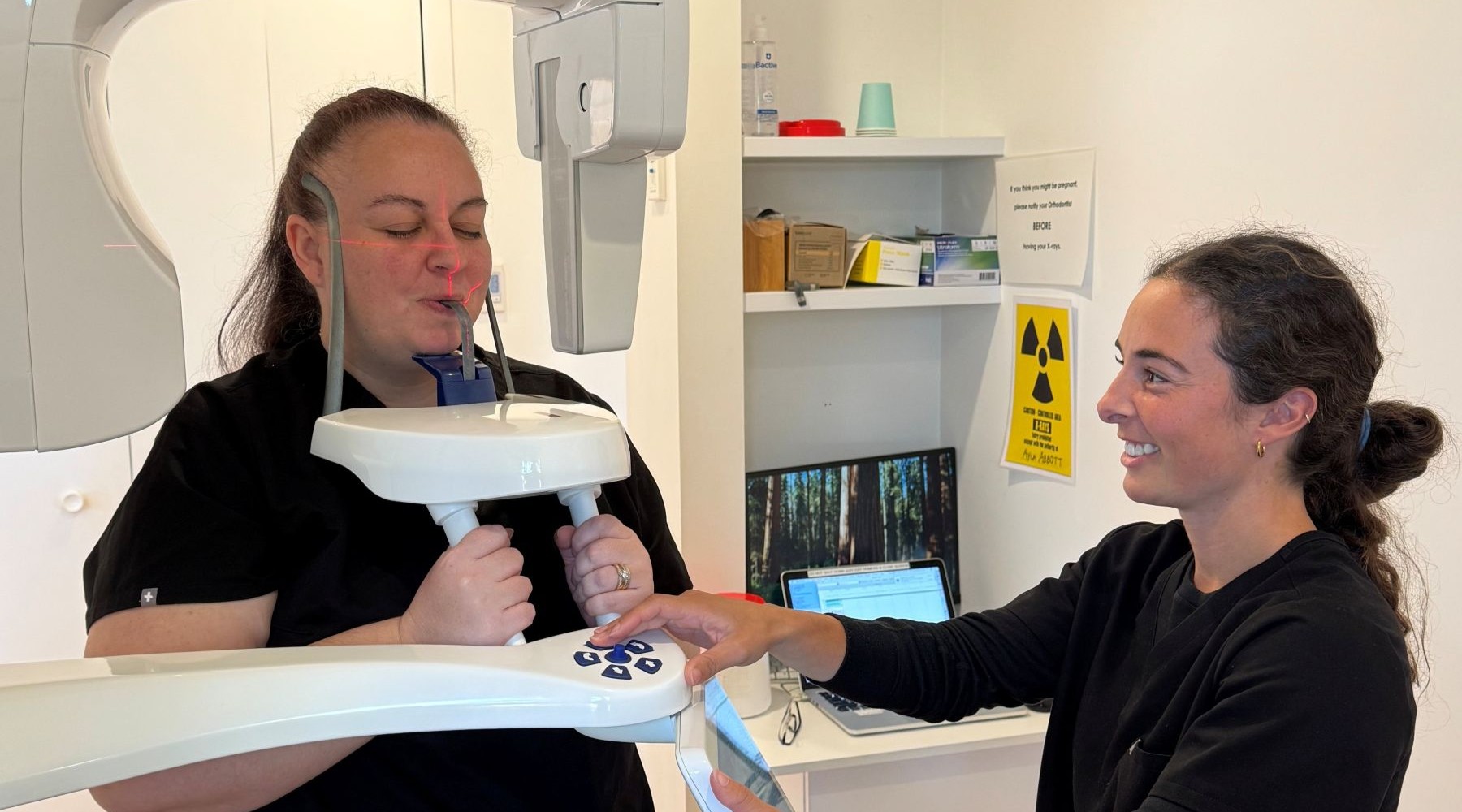
- Cephalometric analysis: A side-on skull X-ray allows the orthodontist to take precise measurements of the angles and proportions of the facial bones. By comparing these against established norms and tracking changes over time, the specialist can identify the direction and rate of jaw growth with considerable accuracy.
- Skeletal maturity assessment: The stage of skeletal development matters as much as age. Orthodontists assess how far through the growth cycle a child is by examining specific indicators on X-rays, including the cervical vertebrae visible on a cephalogram. This tells the specialist how much growth remains and helps time treatment accordingly.
- Growth pattern classification: Jaws tend to grow in identifiable patterns. Some children have a horizontal pattern, where the lower jaw grows forward. Others have a more vertical pattern, where the face grows downward. Identifying which pattern applies early allows the orthodontist to anticipate how the bite will change and plan accordingly.
- Family history and facial assessment: Because jaw structure is strongly hereditary, understanding the facial profile of parents and siblings adds useful context. Combined with a clinical assessment of the child’s current facial proportions, this helps build a picture of likely future development.
- Changing height: Basic height charts can also be a useful way for parents to keep an orthodontist informed from home of when a growth spurt is underway and a useful treatment window may be available.
This combination of tools and knowledge is a core component of specialist orthodontic training. It requires years of clinical education and ongoing practice, which is exactly what every specialist orthodontist/NZAO member brings to an assessment.
What Can and Cannot Be Predicted
A specialist orthodontist can predict the general direction and pattern of growth with a high degree of confidence.
They can identify whether a jaw is likely to grow forward or downward, whether a discrepancy between the upper and lower jaw will improve or worsen, and roughly how much growth remains.
What cannot be predicted with precision is the exact amount of growth that will occur or the precise timing of growth spurts. Every child is an individual, and growth does not follow a strict timetable.
This is why specialist orthodontists monitor their younger patients over time rather than making a single prediction and treating to it. Regular reviews allow the treatment plan to be adjusted as growth unfolds.
For parents, the important thing to understand is that uncertainty about the precise degree of growth does not mean the orthodontist is working blind. The framework for prediction is well-grounded in science, and a specialist who monitors a child regularly is far better placed to respond to unexpected developments than one seeing a child for the first time.
When Growth Can Be Guided
One of the most significant advantages of early specialist assessment is the ability to intervene during the growth phase, not just after it.
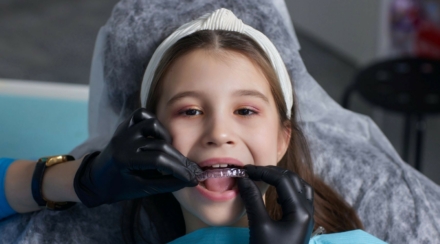
In children who are still actively growing, specialist orthodontists can use appliances designed to modify the direction or amount of jaw growth. This is called growth modification or orthopaedic treatment, and it is only effective during a specific window in a child’s development.
A child with an upper jaw that is not keeping pace with the lower may benefit from an appliance that encourages forward growth of the upper jaw. A child whose lower jaw is growing too far forward may be a candidate for appliances that help redirect that growth.
Neither of these interventions is possible once the jaw has finished growing. At that point, surgical options may be the only way to correct a significant skeletal discrepancy.
This is why the New Zealand Association of Orthodontists recommends an assessment by a registered specialist no later than age seven or eight. The earlier a growth problem is identified, the wider the range of treatment options available, and the less invasive those options tend to be.
What This Means for Your Child
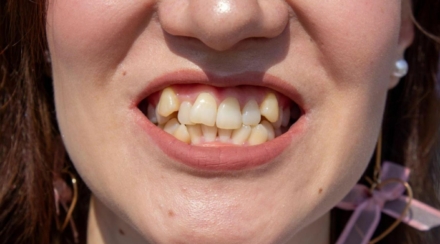
If you have noticed an underbite, overbite, asymmetry, or crossbite in your child, the right step is a specialist orthodontic assessment.
Not a general observation. Not a wait-and-see approach based on the hope that children grow out of these things. In many cases, they do not, and the cost of waiting is a narrower set of options later on.
A registered specialist orthodontist will carry out a full assessment, interpret the diagnostic records, and give you a clear picture of what is happening with your child’s jaw development and what, if anything, needs to be done about it.
That clarity is what specialist training is for.
Find a Registered Specialist Orthodontist
The New Zealand Association of Orthodontists represents registered specialist orthodontists throughout New Zealand.
NZAO members are trained to the highest standard in the assessment, prediction, and management of jaw growth in children and adolescents. They are the most qualified professionals in the country to advise you on your child’s orthodontic development.
Use our Find a Specialist tool to locate a registered specialist orthodontist near you. Early assessment gives your child the most options. Do not wait until the growth window has closed.
Frequently Asked Questions About Jaw Problems and Treatment
A meaningful jaw growth assessment can be carried out from around age seven/eight, when the first adult molars and incisors have come through and the relationship between the upper and lower jaw is becoming clear.
The New Zealand Association of Orthodontists recommends this as the age for a first specialist assessment.
Importantly, this does not mean treatment will begin at this age. In many cases the specialist will monitor your child at intervals, identifying the optimal point to intervene as development progresses.
In many cases, yes, provided the problem is identified while the jaw is still growing an the genetic components are not overwhleming During the growth phase, specialist orthodontists can use functional appliances and orthopaedic devices to guide jaw development in a more favourable direction.
Once growth has completed, the options for correcting a significant skeletal discrepancy are more limited and may involve surgery. This is one of the strongest arguments for early assessment: problems that can be managed relatively simply during childhood may require far more involved treatment if left until later.
This depends on the nature and cause of the bite problem. Minor discrepancies sometimes improve as a child grows, but significant underbites, overbites, and crossbites rarely correct themselves and often worsen over time.
The only reliable way to know whether your child’s bite problem is likely to resolve or deteriorate is to have it assessed by a registered specialist orthodontist. Assuming a bite problem will resolve on its own is a risk that can significantly narrow the treatment options available later.
This varies depending on the child’s situation. Where active growth modification treatment is underway, reviews may be every six to ten weeks. Where a specialist is monitoring a younger child whose treatment has not yet begun, six-monthly or annual reviews are common.
The frequency is determined by the orthodontist based on what they are tracking and how rapidly things are changing. What matters is that the monitoring is being done by a trained specialist who can interpret changes in the context of the full clinical picture.
Yes, significantly. If a child’s jaw continues to grow substantially after treatment is complete, the teeth can shift and the bite can change, potentially undoing some of what was achieved.
Specialist orthodontists account for expected remaining growth when planning treatment, timing certain interventions to coincide with or follow the peak growth period.
This is one of the reasons orthodontic treatment planning for children and adolescents is considerably more complex than treatment for adults, and why specialist training is essential for managing it well. However, if there is late inevitable unfavourable growth, your orthodontist will still always provide you with your options to then remedy the situation.
Some general dentists do offer orthodontic treatment that attempts to address jaw growth.
However, dentists have not undergone 3 years of specialisation in orthodontics, so they often do not have the depth of knowledge an orthodontist will have in the field of orthodontics.
Accounting for jaw growth and treating this category of cases can be considerably complex. For anything beyond simple tooth alignment, the diagnostic depth and clinical experience of a specialist orthodontist is advisable.